Black cab fury grows over Edinburgh Airport charges as union takes fight to Scottish ministers
- Perry Richardson

- May 21
- 3 min read
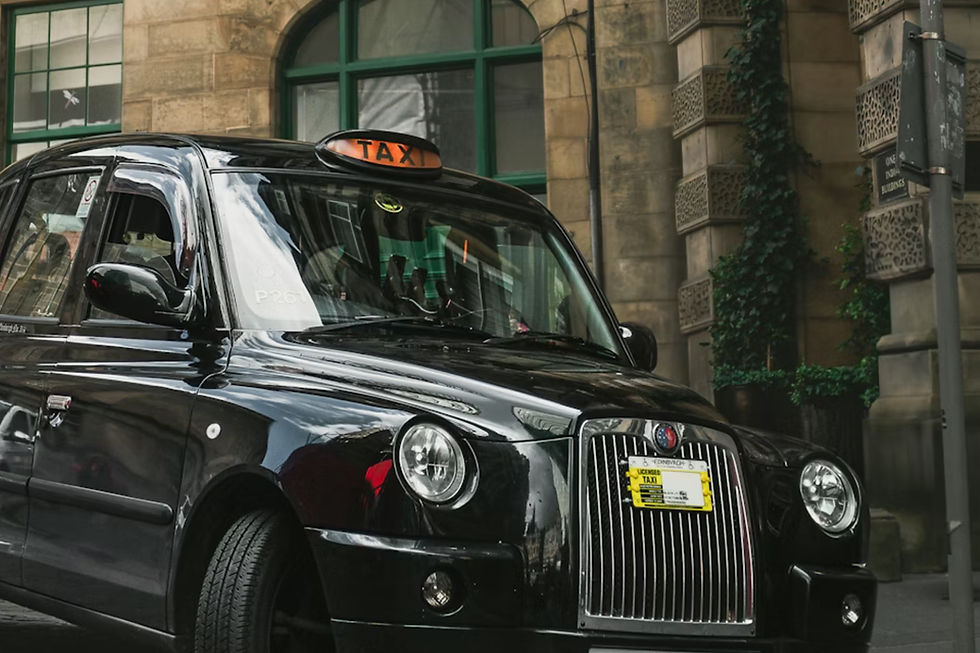

A growing dispute over airport access fees has moved into the political arena after Unite’s Edinburgh Black Cab Branch formally called for licensed taxis to be exempt from Edinburgh Airport drop-off charges.
In a letter sent to the First Minister of Scotland, the Cabinet Secretary for Transport, MSPs, Edinburgh Airport executives and City of Edinburgh Council transport and licensing committees, the union branch urged stakeholders to consider “urgent policy and legislative change regarding the removal of airport barrier charges for licensed public transport operators”.

The call comes after Edinburgh Airport announced a further increase to its drop-off fee, which will rise to £8.50. Unite warned that the “continued upward trend in airport barrier charges shows no indication of slowing and places increasing financial pressure on passengers, taxi drivers, and transport operators alike”.
The union argued that licensed black cabs should be treated differently from private motorists because they form “a recognised and essential part of Scotland’s public transport network”. The letter adds: “Public transport should be supported, encouraged, and made accessible, not penalised.”
Unite’s Edinburgh Black Cab Branch has formally called on the Scottish Government, MSPs and Edinburgh Airport to support exemptions for licensed taxis from rising airport barrier charges.
Accessibility and passenger welfare formed a major part of the union’s argument. Unite stated that the current charging structure “disproportionately affects elderly passengers, disabled passengers, families travelling with luggage, and those requiring transport during unsociable hours where alternative public transport options may be limited or unavailable”.
The letter also challenged the impact of rising fees on disabled travellers, saying: “While Edinburgh Airport rightly promotes accessibility and assistance services for passengers with reduced mobility, increasing barrier charges place an additional burden on the very passengers most likely to depend upon taxis as their primary means of transport.”
The branch highlighted the taxi trade’s investment into cleaner vehicles and environmental compliance, noting that drivers and operators have invested “substantial sums into Euro 6 retrofitting, hybrid technology, and fully electric wheelchair-accessible vehicles”.
Unite further stated that Edinburgh’s licensed black cab fleet remains “one of the largest providers of wheelchair-accessible transport services in Scotland, delivering an essential service 24 hours a day, 365 days a year”.
The letter links the issue directly to Scottish Government transport policy, arguing that ministers have “consistently promoted the importance of integrated and sustainable public transport while encouraging reduced reliance on private car ownership”.
Union representatives warned that continued increases in airport access fees risk damaging the long-term sustainability of the licensed taxi sector.

The letter states: “Successive increases in airport access charges risk undermining the viability of an already heavily regulated trade that continues to provide a vital public service to residents, visitors, business travellers, and vulnerable passengers across the capital.”
Among the proposals put forward is a request for “a waiver or exemption from airport barrier charges for licensed black cabs and recognised public transport operators”. The branch also called for “a reasonable grace period permitting a maximum stay of 10 minutes within designated drop-off areas for legitimate passenger pick-up and drop-off activity”.
The union additionally urged policymakers to formally distinguish licensed passenger transport services from private vehicle use within future airport transport strategies. The letter states: “We further ask that any future transport strategy or airport access policy clearly recognises the distinction between licensed public transport operators carrying fare-paying passengers and private vehicles accessing airport facilities for casual or non-commercial purposes.”
Industry sources suggest the correspondence marks the opening phase of a broader campaign expected to gather momentum in the coming months, with further lobbying and engagement planned across the Scottish transport sector.